How to Get Ready for a Cycling Holiday
How to prepare for a cycling trip the right way. Practical tips, exercises, and honest advice so you enjoy every day in the saddle — not just survive it.
Lan
Published February 17, 2026
Edited February 18, 2026
9 min read
Don't want to read all this?
We've planned 800+ cycling trips. Send your dates, fitness and group size — we'll map the route and book every night.
You've booked the trip. The route looks incredible. You can already picture yourself cruising along a quiet road, the sea on one side, vineyards on the other, stopping at a village café for an espresso and something you can't pronounce but will definitely enjoy.
Now here's the question nobody wants to ask:
Can your body actually handle a week of cycling?
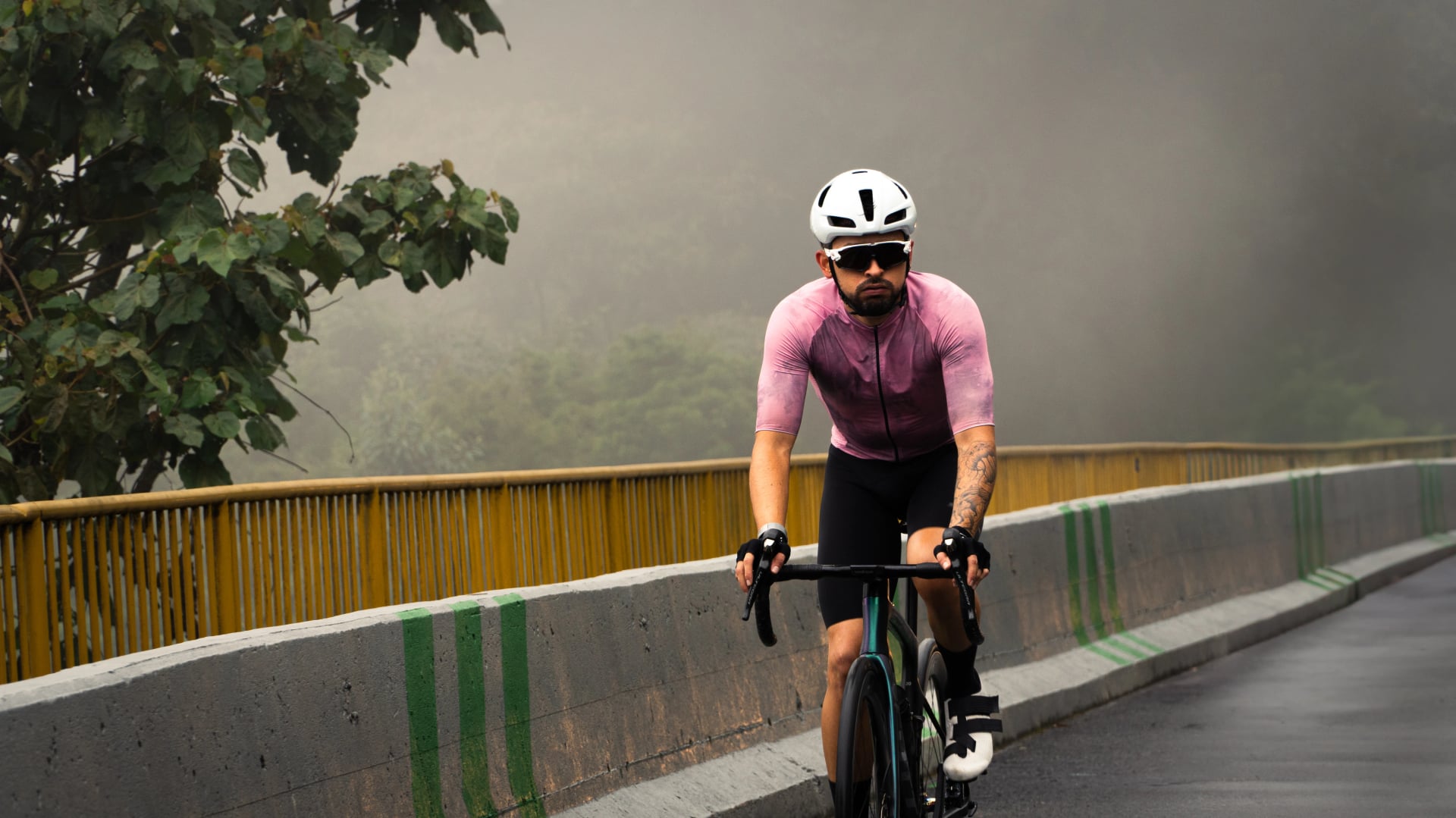
Getting ready for a cycling holiday isn't about becoming a lycra-clad road warrior or training like you're entering the Tour de France.
It's about arriving on day one with a body that's ready for what's ahead — so you spend your days soaking in the scenery instead of counting down the kilometres until it's over.
The good news? A bit of preparation goes a long way. You don't need a coach, a power meter, or a turbo trainer. You just need a bike, a few weeks, and a bit of consistency.
Let's get into it.
Start by Knowing Your Trip
Before you change anything about your routine, take an honest look at what your trip actually involves.
How far will you ride each day?
What's the terrain like — flat river paths, rolling countryside, or proper mountain passes with serious climbs?
And how many consecutive days will you be riding?
If you're taking one of our cycling tours, your can check how demanding your tour is day-by-day under the itinerary section.
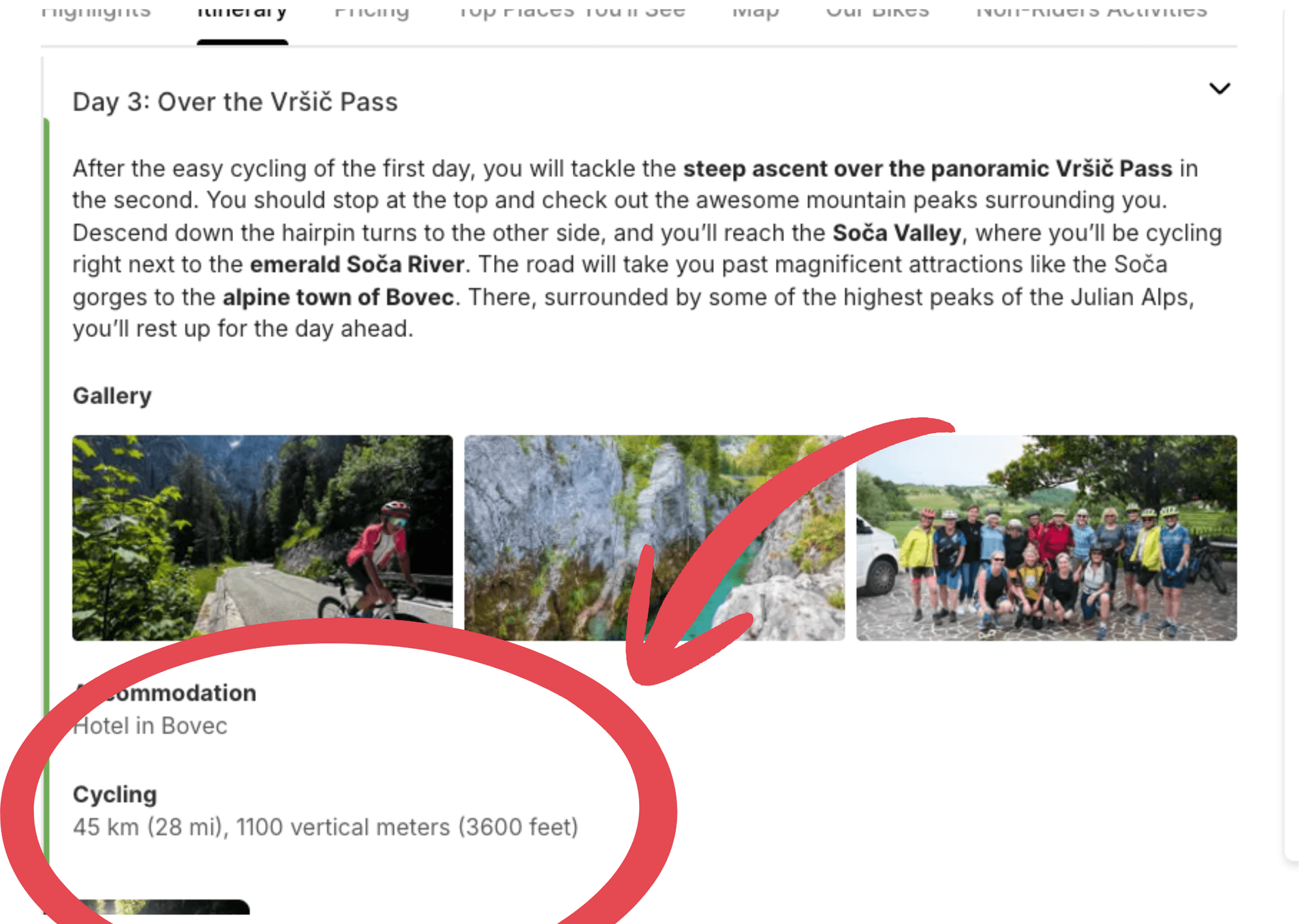
Here's a rough guide to how much preparation you'll need:
Easy (flat terrain, under 40 km/day, 1–3 days): 4–6 weeks of preparation Moderate (rolling hills, 40–70 km/day, 4–7 days): 8–10 weeks of preparation Challenging (mountain passes, 70+ km/day, big elevation, 8+ days): 10–14 weeks of preparation
The more demanding the trip, the earlier you should start. And if you're currently not riding much at all, add a few extra weeks. There's no shame in starting early — only in struggling through your holiday wishing you had.
The Four Pillars of Cycling Holiday Fitness
Saddle time
Build Your Endurance
Strength Off the Bike
Prepare for Hills
1. Saddle Time
This is where cycling holidays are fundamentally different from most sports. It's not just about fitness — it's about comfort.
Riding a bike for several hours, day after day, asks things of your body that nothing else quite replicates. Your sit bones, lower back, neck, shoulders, wrists, and hands all need to adapt to the position. If you haven't been on a bike regularly, these areas will start complaining — loudly — by day two.
The single best thing you can do is ride your bike regularly in the weeks before your trip.
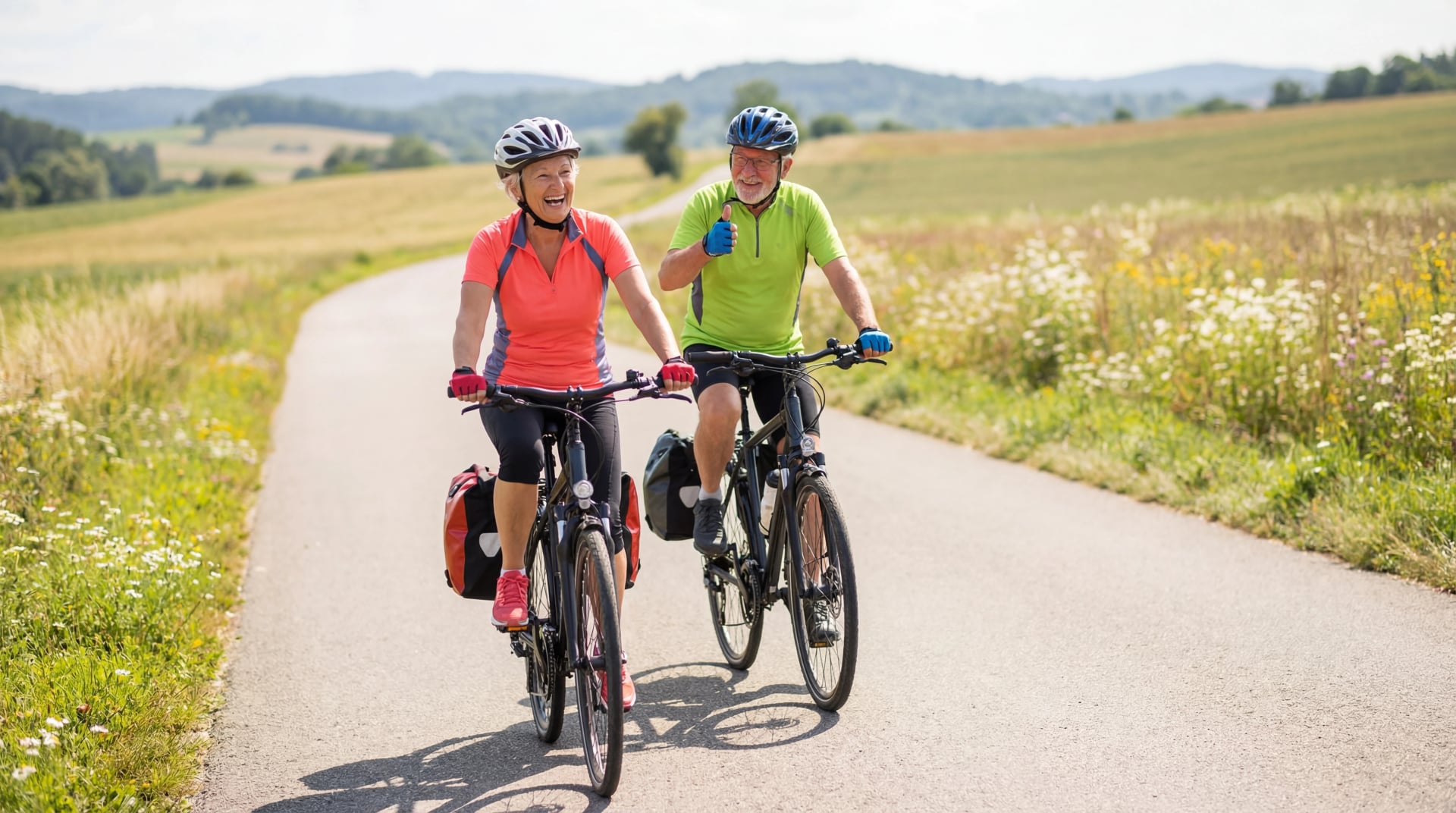
Start with whatever distance feels comfortable — even 20–30 minutes. Then gradually build up. Add a little more time each week. The goal isn't speed — it's getting your body used to being on a bike for extended periods.
A few key rules:
Ride at least twice a week. Three times is even better. Frequent short rides do more for your body than one long ride once a fortnight.
Build up by no more than 10% per week. Whether that's time or distance. Your body adapts, but it needs time.
Do back-to-back rides. This is the secret weapon. Riding Saturday and Sunday simulates what a cycling holiday actually feels like — getting on the bike when your legs are still tired from yesterday. If you can comfortably ride two days in a row, you're in good shape.
Wear padded cycling shorts. Every time you ride. They make a massive difference to saddle comfort, and your body needs to get used to them too. If you have a favourite pair, bring them on the trip. If you don't own any yet — get some now and start riding in them.
By the week before your trip, aim to be comfortably riding a distance that's at least two-thirds of your longest day on the tour.
2. Build Your Endurance
A cycling holiday is an endurance event spread across several days. Even on a "relaxed" tour, you might be riding 4–5 hours a day. On hillier routes, your heart and lungs are working hard for sustained periods.
The good news: if you're already building up your saddle time, you're building endurance at the same time. But you can boost it further:
Ride at a pace where you could hold a conversation. This is called your aerobic zone, and it's where most of your holiday riding will happen. If you're gasping, you're going too hard.
Mix in some harder efforts. Once a week, include a ride where you push yourself for short bursts — a few minutes at a pace that leaves you breathing hard, then back to easy. This builds your cardiovascular capacity and makes everything else feel easier.
Any sustained cardio counts. Swimming, jogging, brisk walking, even a dance class — anything that keeps your heart rate elevated for 30+ minutes will help. You don't have to do all your training on a bike.
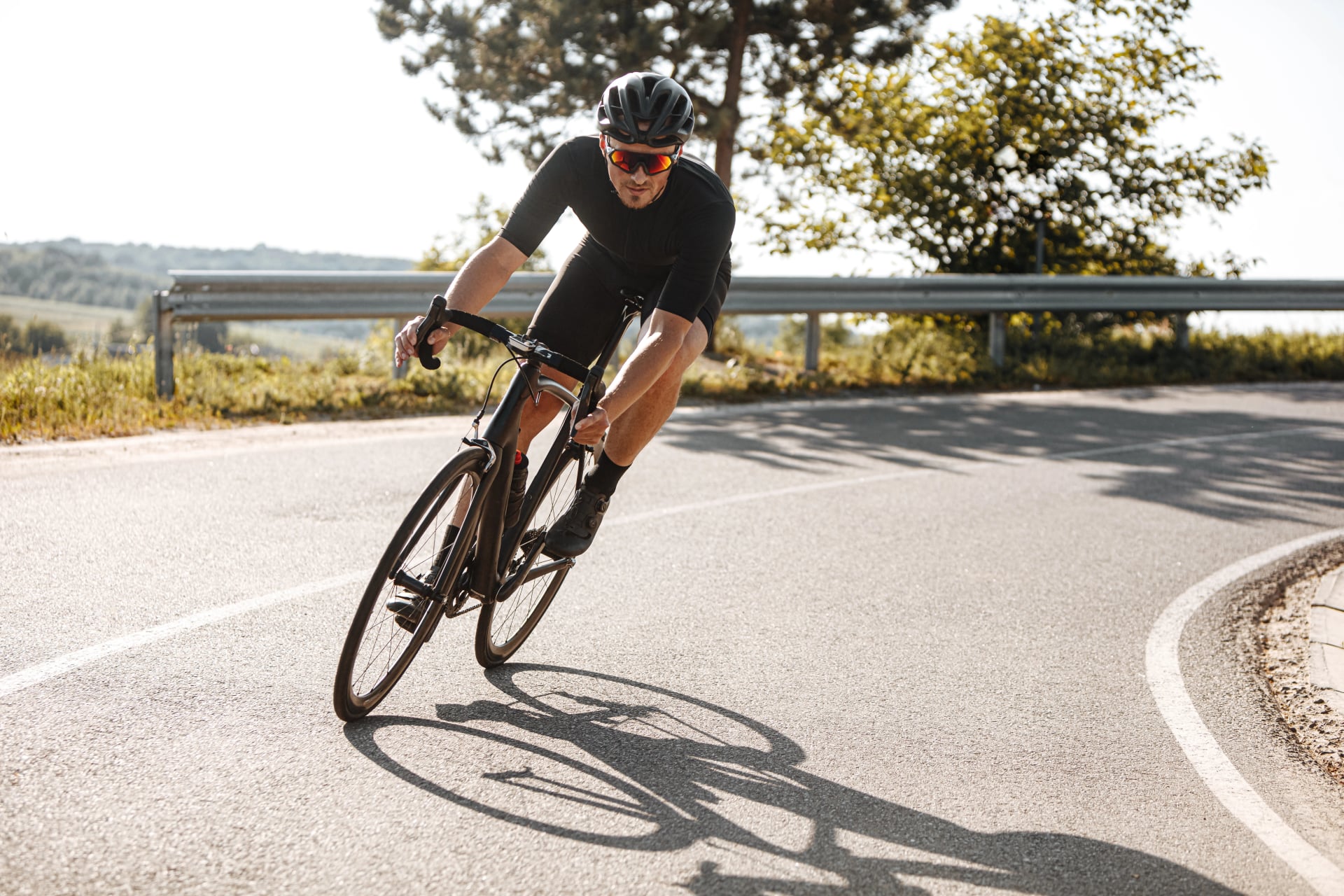
3. Strength Off the Bike
Here's something most recreational cyclists overlook: strong muscles protect your joints and make you more comfortable on the bike.
After several hours of pedalling, it's not just your legs that feel it. Your lower back aches from holding your position. Your neck stiffens from looking ahead. Your core fatigues, and your posture collapses, which leads to more aches everywhere else.
A little strength work — even just twice a week — makes a surprisingly big difference.
The key areas for cyclists:
Core — your core stabilises your entire body on the bike. When it's weak, your lower back picks up the slack. Planks, dead bugs, and bicycle crunches are all excellent.
Glutes — your biggest power source. Squats and lunges keep them strong and firing properly. Weak glutes force your quads and knees to overwork.
Legs (quads, hamstrings, calves) — squats, lunges, step-ups, and calf raises. These are the engines. Same exercises that work for hikers work brilliantly for cyclists too.
Upper back and shoulders — the area that takes the most punishment from your riding position. Rows, reverse flys, or simply holding a push-up position all help.
Neck — gentle neck stretches and range-of-motion exercises. Your neck holds your head up for hours while you look at the road ahead. Don't neglect it.
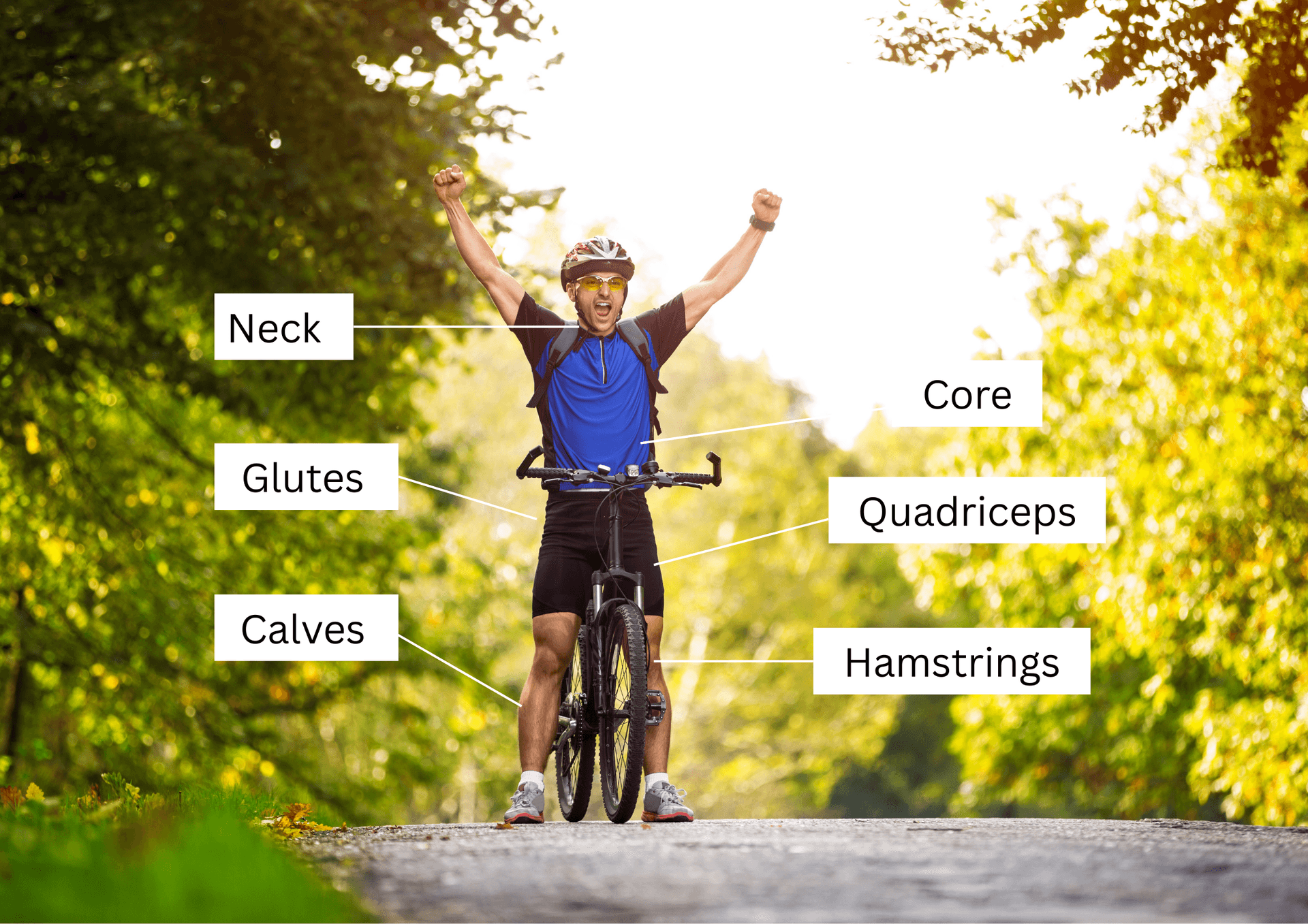
None of this requires a gym. Bodyweight exercises at home, 20–30 minutes, two to three times a week. You'll notice the difference from day one of your trip.
4: Prepare for Hills (If Your Route Has Them)
If your cycling holiday is mostly flat — along a river, through wine country, or along the coast — you can skip this section. Endurance and saddle time will carry you through.
But if your route has climbs, you need to prepare for them specifically. Riding uphill asks a completely different effort from your body — your heart rate spikes, your legs burn, and if you're not used to it, even a moderate hill can feel like a wall.
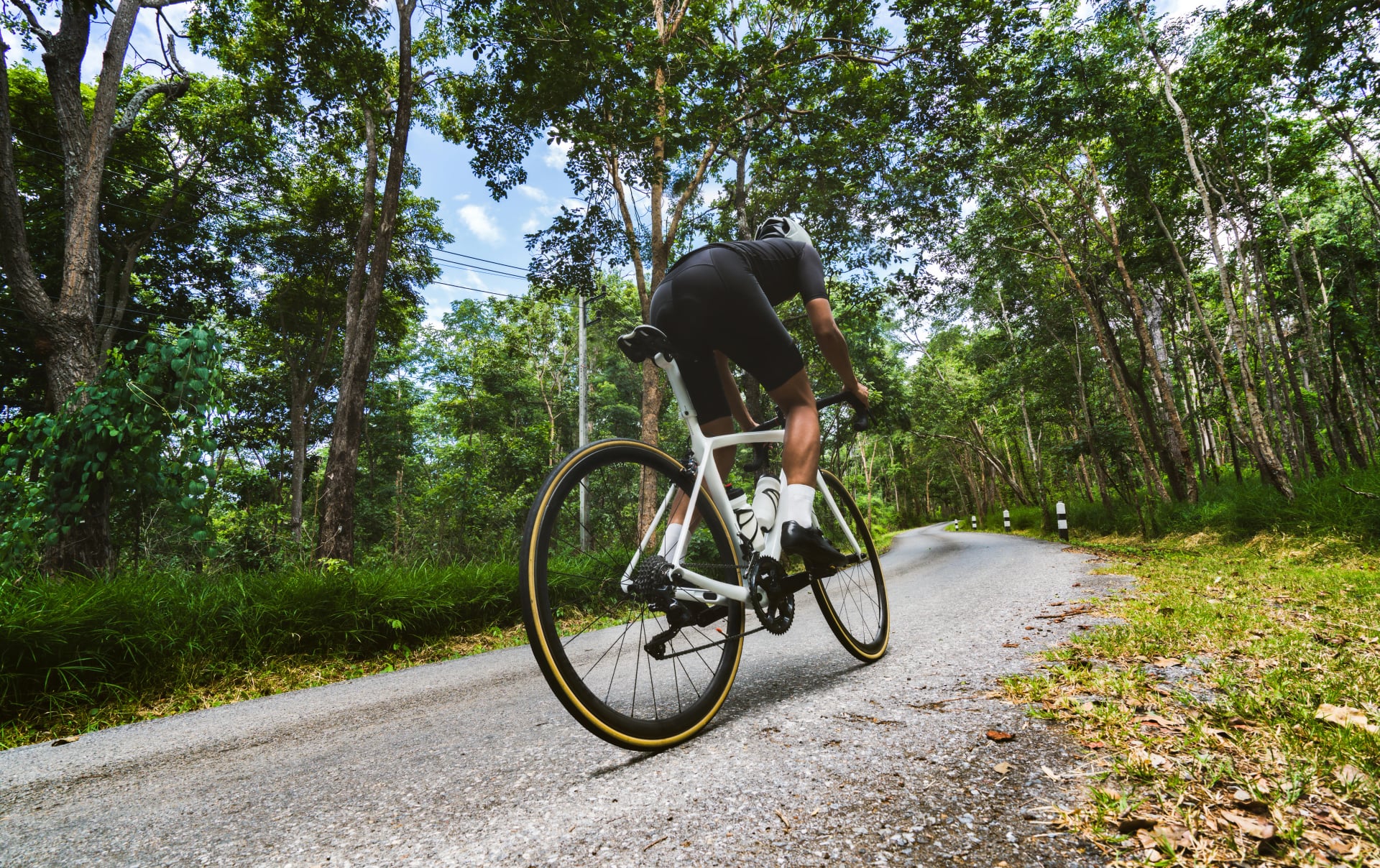
If you have hills near home: ride them. Regularly. Start with smaller ones, build up to longer climbs. Even repeating the same hill several times in one ride is excellent training.
If you live somewhere flat: you can still prepare. Here's how:
Use a harder gear. Ride at a slower cadence (around 60 rpm) in a higher gear on flat roads. This simulates the resistance of climbing and builds the specific leg strength you'll need.
Find ramps or bridges. Ride up and down any incline you can find — car park ramps, overpasses, anything with a gradient.
Interval training. Push hard for 3–5 minutes, recover for a few minutes, repeat. This mimics the stop-start effort of tackling a series of climbs.
Use an indoor trainer. If you have access to one, apps like Zwift let you simulate real mountain routes from your living room.
The biggest mistake people make with hills is ignoring them in training and hoping for the best. Hills don't care about hope. They care about preparation.
And one reassuring thing: you don't need to be fast. There's no time limit on a holiday. Spin a low gear, take your time, stop for a breather if you need one. The views at the top are the same whether you took 20 minutes or 45.
What About E-Bikes?
If you're riding an e-bike on your trip — great choice. The motor takes the edge off the climbs and extends your range. But you're not off the hook.
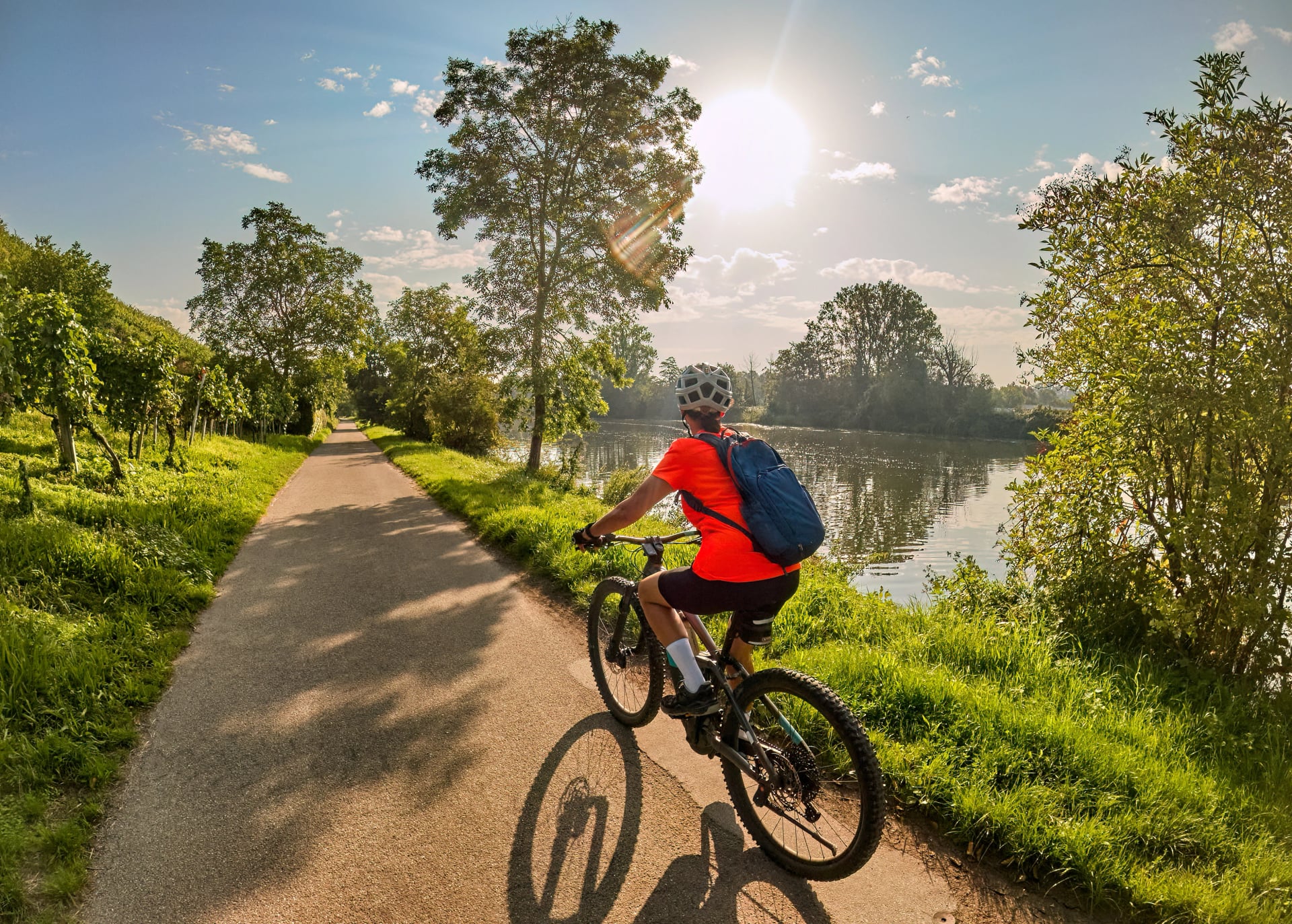
You're still sitting on a saddle for hours. You're still using your core, shoulders, neck, and back. You're still pedalling — the motor assists, it doesn't do the work for you. And on a long day, you'll still feel it in your legs.
The preparation is lighter, but the principles are the same: get some saddle time before the trip, do a bit of strength work, and don't arrive on day one having not ridden a bike in months.
E-bike or not, a bit of prep means the difference between enjoying every day and limping to the finish line.
The Bottom Line
Getting ready for a cycling holiday doesn't require a coach, a fancy setup, or the discipline of a professional athlete. It requires a few weeks of consistent riding, a bit of strength work, and the willingness to get on your bike before the trip starts.
The payoff is enormous. Instead of surviving your ride, you'll love it.
So start now. Get on the bike. Your adventure begins well before you reach the start line.
Still looking for the right cycling trip?
Browse our collection of cycling tours and find the one that fits your travel style and fitness level.
And if you're not sure which route is best for you, just reach out to our team — we'll be happy to help you choose the perfect trip.

About this author
Lan is our cycling manager and the obsessively organized planner you want in your support car — cool under pressure and always three turns ahead. When he's not mapping routes, he's enjoying his newest title: Dad.